
Draft and summarise.
Answer questions, shorten text, explain the stand. The model stays with the answer. No send, no file in the matter, no posting.
Less routine. More time for work that needs professional judgement.
Having an email drafted is a start. AI gets interesting when it knows the context, finds the right files and prepares the next step – without you explaining every move again.
In a fiduciary office that means: sort incoming requests, spot missing documents, draft replies. From approved instructions come contract or invoice drafts. People review and decide – instead of gathering everything from scratch each time.
Assign the client email to the right matter and list what is missing.
Matter recognised, missing documents listed – nothing sent outside yet.
A concept, not a connected system. Clickable sample view with sample data – no real client files, no hooked-up mailbox, no model.
Inspired by open approaches such as DeepSeek Harness ↗.
Four functional stages – not a historical taxonomy and not a product ranking. Whether a stage fits depends on the workflow, not on the tool name.
Answer questions, shorten text, explain the stand. The model stays with the answer. No send, no file in the matter, no posting.
From allowed documents comes a real draft: reply, contract, analysis. Reviewed Python or a CSV may prepare figures. The draft is not a sent document.
Intake, document preparation and completeness can be separate tasks – with the same originals and clear roles. Not three autonomous bots granting each other rights.
Remind what is still missing internally, within delegated authority. No unlimited autonomy, no silent action outbound.
Preparing is not executing. Legal decisions, binding letters, accounting postings, payments and outbound sends stay under human control.
No connected mailbox, no Xero, no live workflows. This is what a recurring case would look like – with human control where it binds.
The client writes and attaches files. The email is data, not a new permission.
The request is assigned to the right matter. Missing facts and documents become visible.
From allowed templates and sources comes a reply draft – with citation and date, not from a random chat.
A person checks the mandate, legal questions and conditions. Without that review nothing goes out.
After approval: a contract draft and, where it fits, an invoice draft. Both stay drafts until someone accountable decides.
Internal status and reminders for open steps. Reminding is not paying, posting or sending.
Legal decisions, binding letters, postings, payments and outbound sends stay under human control. Sensitive originals are not passed to a frontier model just because the interface is open in the office.
A CSV or reviewed Python can prepare figures. A suggestion for Xero stays a suggestion. API credentials live on the server, never in prompts. Xero remains a cloud service – even if the language model runs locally.
Up-to-date originals, rules, templates and matter files. Least privilege per person and agent, separated matters, sources in the draft. What sits in a personal thread is not an authoritative record.
Sources are versioned – not copied into ten chats. Anyone who asks sees the stand with date and origin. Drafts show what they came from.
Taking new files into the corpus every day: that is how we would implement it. It is not an already connected service and not a claim that your archive is hooked up today.
First filter who may see which file. Only the allowed slice reaches a model. Otherwise search bypasses your matter separation. An incoming email does not change that.
If a document is withdrawn, that has to land in the index, in caches and in later answers – not only in the original store. Permissions and deletion apply to person and agent.
Clients, entities and mandates stay separated. A prompt must not surface someone else’s matter just because people share an office.
Each person and each agent only as much as the workflow needs. Extra rights do not appear because a task would be “practical”.
A chat window on your PC does not mean the model runs there. Embeddings, OCR, logs, backups and connected tools can sit somewhere else. Professional secrecy needs a review of product, contract, data path, access and the law of the profession and country (DE, AT, CH, LI).
The interface can live on the laptop. The model, the index or a plugin can still call a cloud API.
Useful when files should not leave the network. Hardware, maintenance and access come with it – not just the install. Technical setup with Ollama: Local AI on your own hardware.
A small CPU server, for example at DigitalOcean, can host the interface and integrations. It is not an inference workstation for 35B or 120B models. No price or performance claim for a specific tariff.
Google, Microsoft, Anthropic direct or a reseller: that is cloud processing. Not a blanket yes or no for professional secrecy – check product, contract, region and subprocessors.
Only what you keep local stays local. Local inference alone does not create data protection or professional secrecy. Switzerland on its own is not enough. Orientation: AI and professional secrecy.
Assumed figures so the order of magnitude is visible – not a measured benchmark, not a market hourly rate, not a client result.
per recurring case, without shared templates and without pre-sorted documents.
the same case, including human review. The 20 minutes freed are working time, not automatic profit.
calculated capacity in the month. Assumed internal full cost: CHF 100 per hour.
CHF 2,000 / month gross capacity value under these assumptions.
Worked example with assumed figures – not a measured benchmark and not a market hourly rate. Cost of setup, software, inference and support sits against the benefit. Time is not automatic cash saving or profit.
Which interface fits depends on the task – not on a general league table. We leave unverified capabilities and model names out.
Open WebUI can attach knowledge and tools. Whether that is enough for your mandates we check against your workflow – no pre-installed firm knowledge.
Cursor is a developer workspace. Your own API keys do not mean requests stay on your machine: Cursor’s documentation says those requests are still routed through Cursor’s infrastructure so the prompt can be built there. Cursor: Bring your own API key.
dsh may be an alternative. Whether it fits hosting, permissions and your profession is an evaluation, not a chosen tool.
NemoClaw might later be a security layer around agents. That is not a legal guarantee and not a substitute for Security Harness.
Professional secrecy depends on product, contracts, data path, region, subprocessors and the rules of the profession and country (DE, AT, CH, LI). Switzerland on its own is not a guarantee. Google, Microsoft or Anthropic direct are not a blanket yes or no. Orientation: AI and professional secrecy. Delivery in THE LAB.
From a simple chat to a team of people and agents. See the differences – and talk with us about what you actually need.
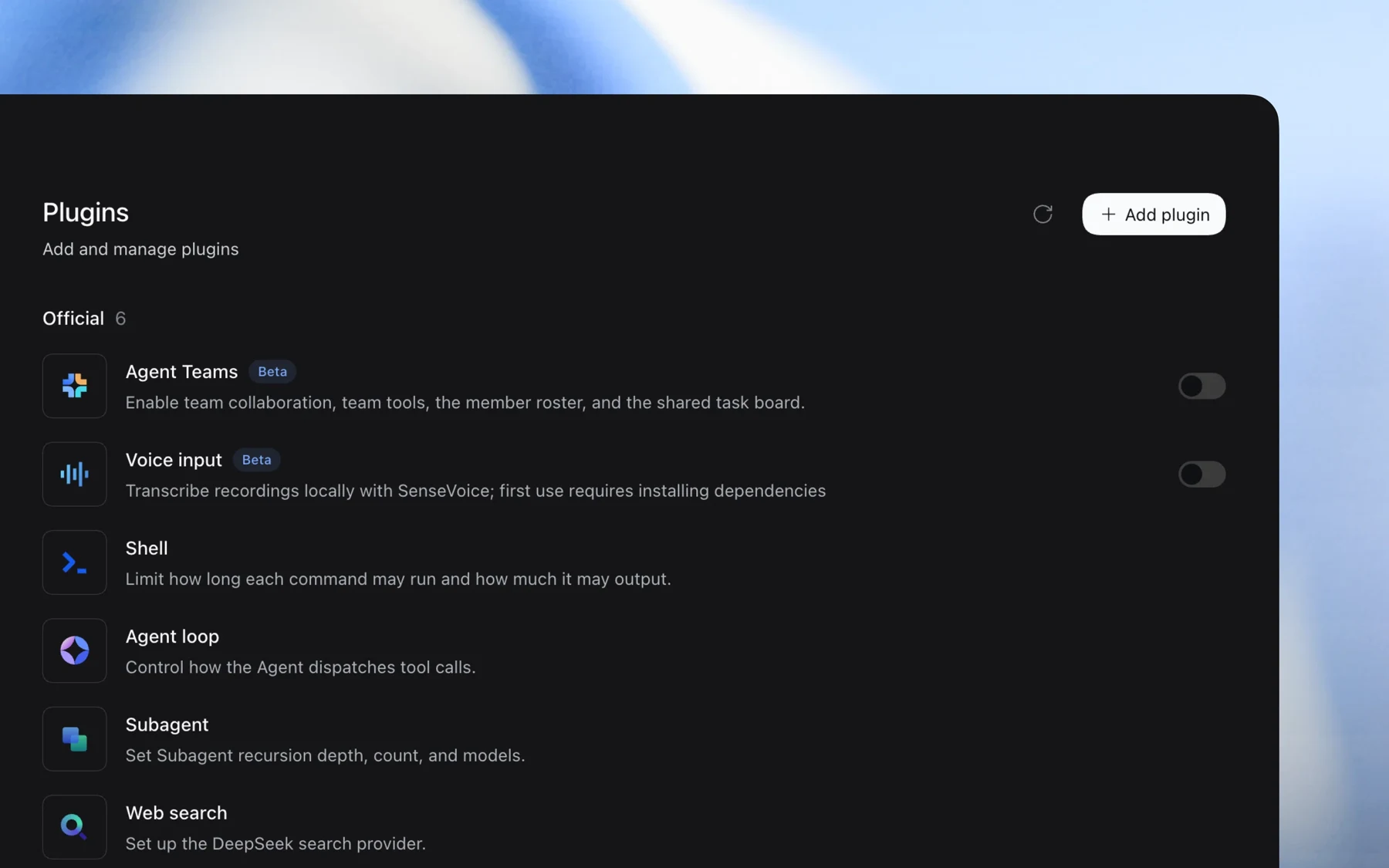 Enlarge view ↗
Official product view · plugin management
Plugins, tools and traceable flows: Harness is one possible technical base for a team workspace shaped with you.
See DeepSeek Harness in the original ↗Does this fit our team?Schematic illustration · original demo on buzz.xyz
Buzz puts collaboration of team and agents at the centre. Interesting for shared projects and software work.
See Buzz in the original ↗Does this fit our team?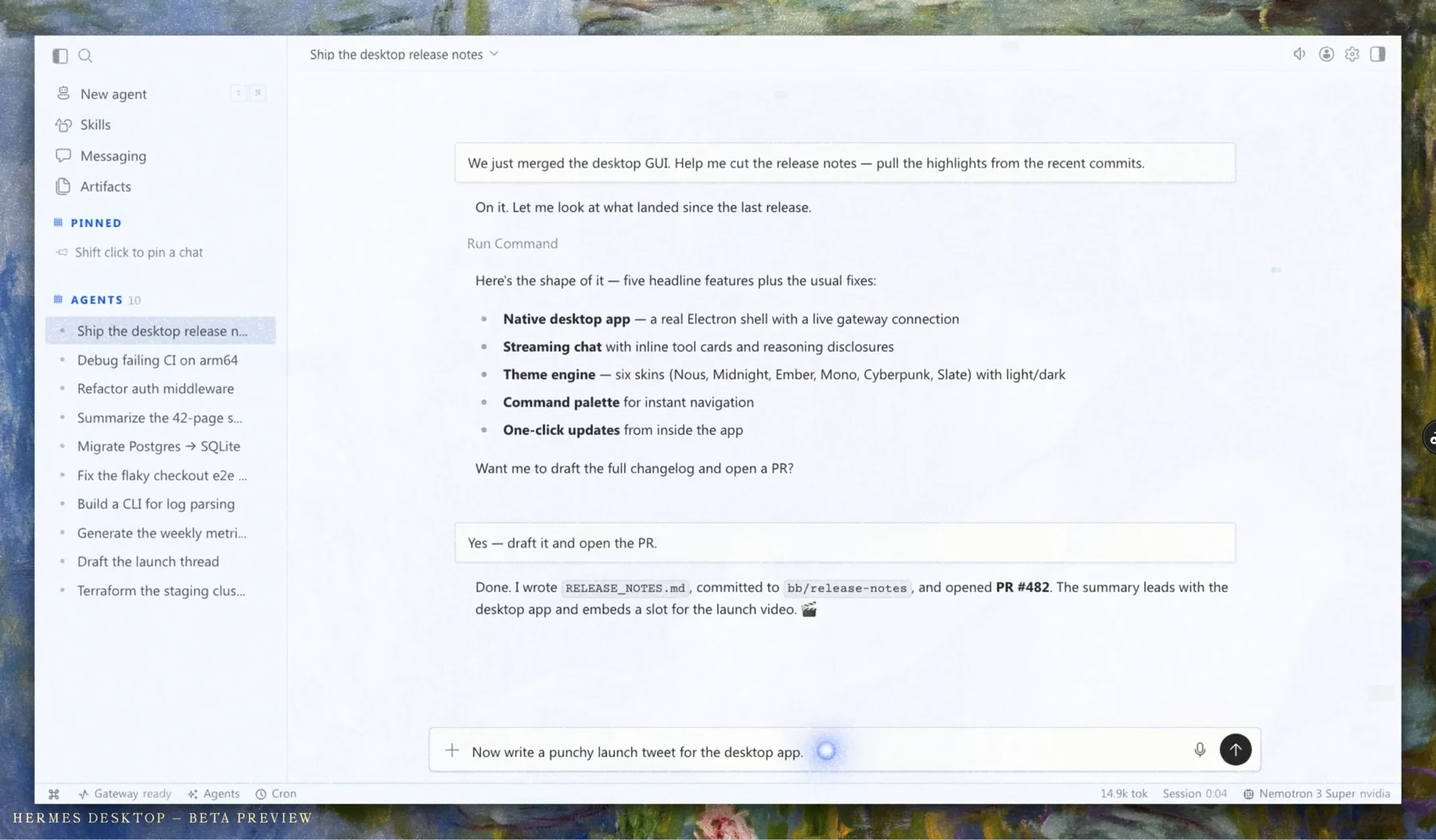 Enlarge view ↗
Official desktop-app preview
Hermes joins a desktop interface with reusable skills and memory. An option for personal and recurring tasks.
See Hermes in the original ↗Does this fit our team?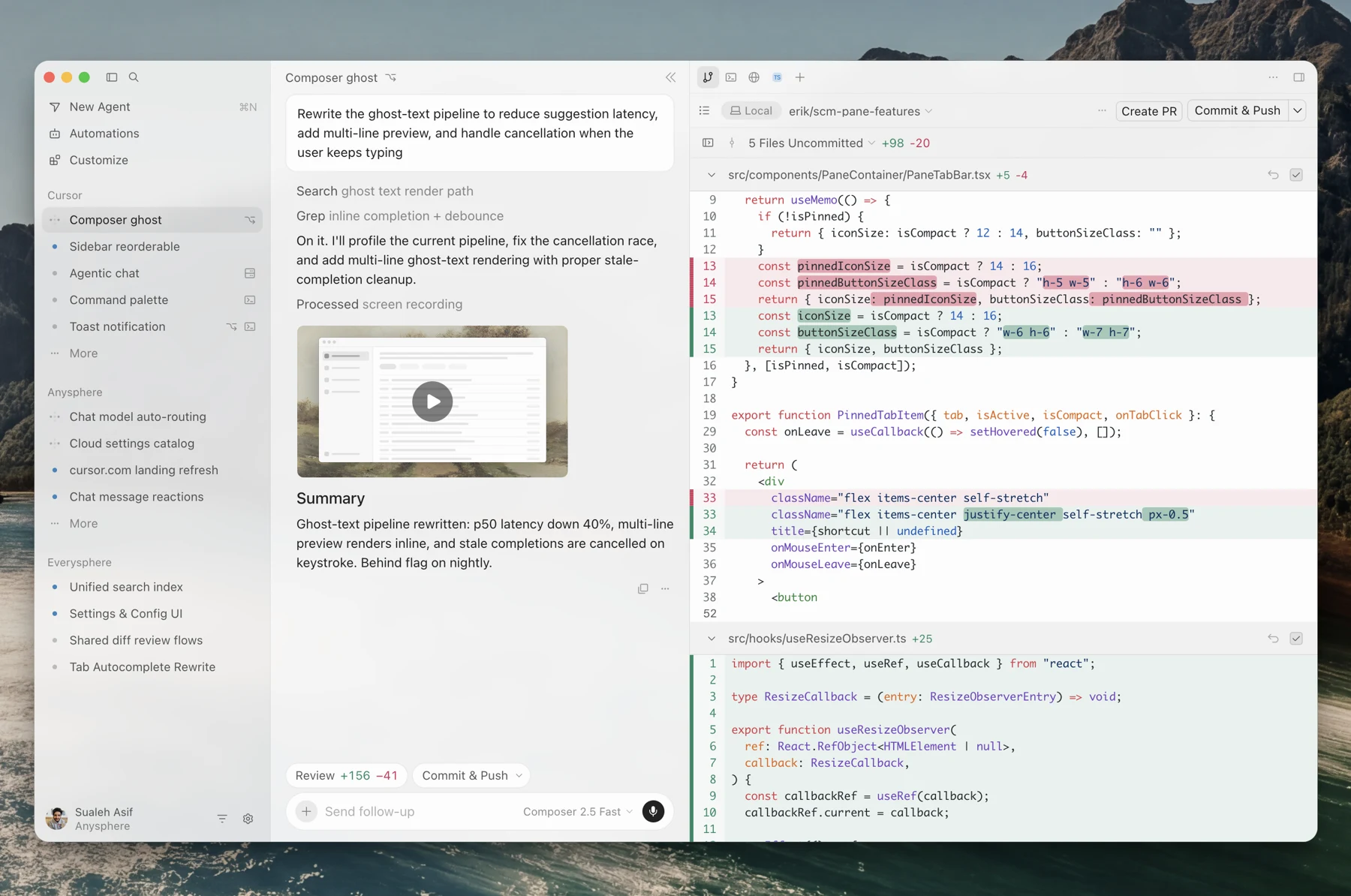 Enlarge view ↗
Official documentation · agent workspace
A developer workspace, not a guaranteed local-only system. Even with your own API key, Cursor says requests still go through its servers so the prompt can be built there. Docs on your own API keys ↗
See Cursor in the original ↗Does this fit our team?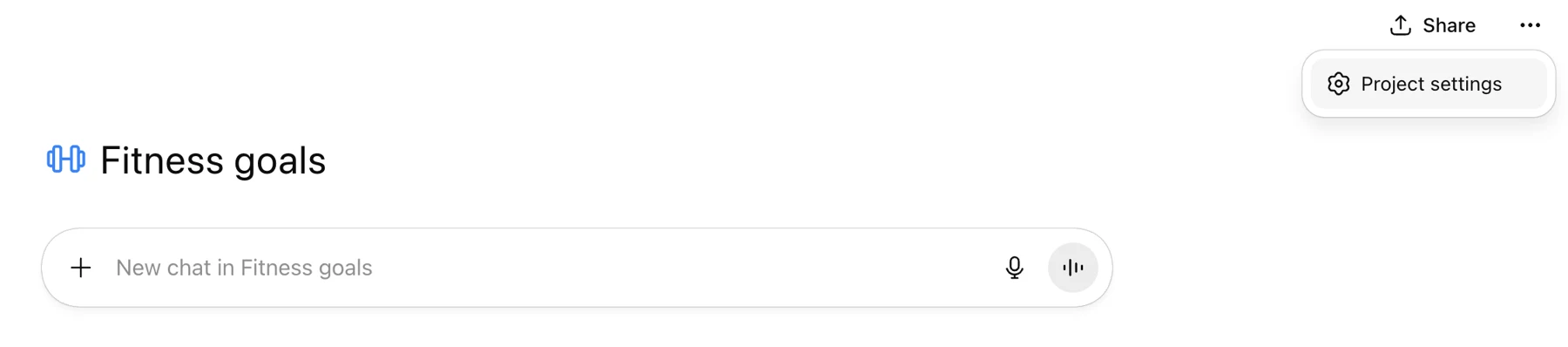 Enlarge view ↗
Official UI excerpt · projects · February 2026
Projects bundle chats, files and instructions. A useful reference for a simple way into daily knowledge work.
See ChatGPT in the original ↗Does this fit our team?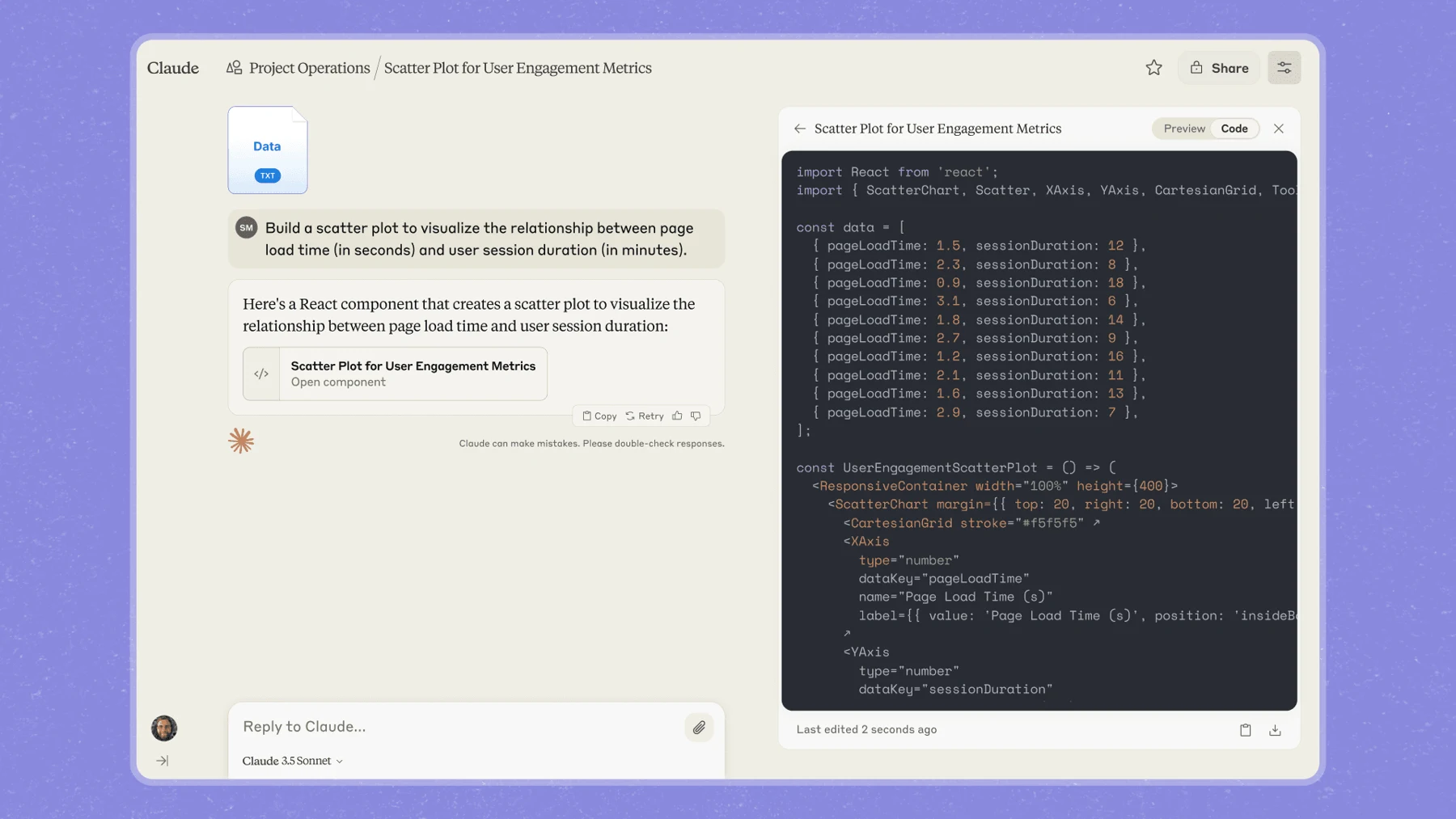 Enlarge view ↗
Official historic product view · June 2024
The Artifacts view shows how content can be edited next to a conversation. A good pattern for visible work product.
See Claude in the original ↗Does this fit our team?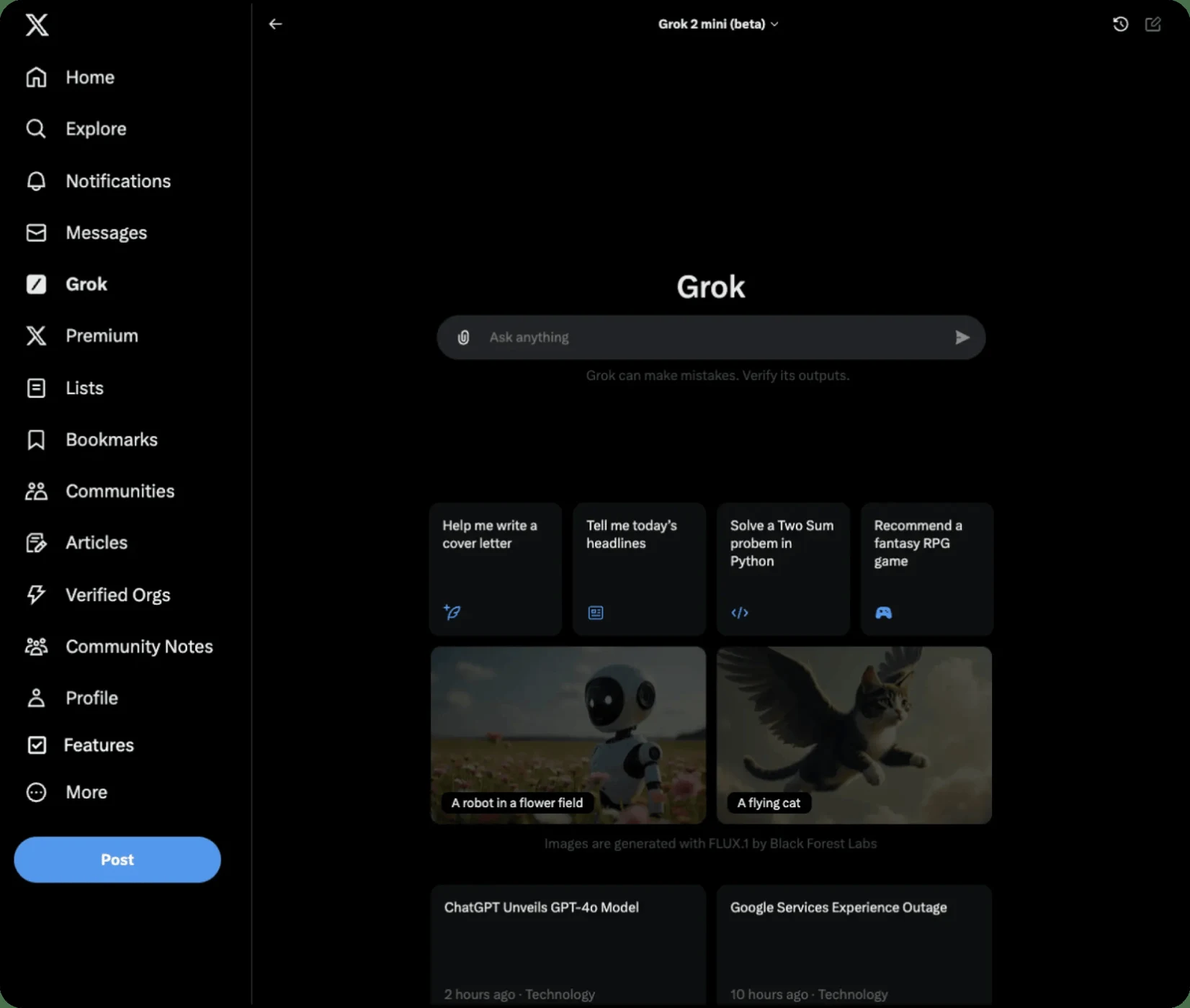 Enlarge view ↗
Official historic product view · Grok 2 in X · August 2024
A reduced chat start with suggestions for the first task. Here as an example of an accessible interface.
See Grok in the original ↗Does this fit our team?The products shown belong to their providers. Product examples are not promised integrations and not a ranking. For your own interface we review open-source base, licences, hosting and data paths together. Closed products keep their own brand and terms.
The interface is the way in. It becomes valuable through your knowledge, sensible permissions and flows that work day to day. That is what we build with you in the pilot.
And what does use cost? ↓Not every task needs the most expensive model. Play with the mix – and see what it means for your budget.
Tell us how many people work with AI and which tasks they do. We help you estimate use and set up a sensible pilot.
Free intro call. No token knowledge needed.
Tokens are small text pieces models count with. Input covers your prompts and the context you attach, output the generated answers. How many you get depends on text and model.
Example assignment. Which models solve your tasks well enough we check in the pilot.
USD per 1 million tokens · list prices checked on 9 October 2026. Not a live price feed.
| Model | Input | Output | Mix at 3 : 1 |
|---|
Weighted price per model = (input price × input share) + (output price × output share). The team mix weights those prices by your percentages. Monthly cost = million tokens × blended price; optionally × 1.055 for the platform fee.
Batch means delayed processing and is not the same as a live chat. Caching, tool calls, special rates and possible surcharges for very long contexts are not included.
Sources: OpenRouter model prices · Platform fees
We measure time, the effort of human review, and quality. Expand only if it helps – not because more agents sound impressive.
Together we pick two recurring cases. Rights, sources and what a person must approve are set before anything runs.
How long does the case take before and after – including review? Where do errors appear? What must the model still not touch?
Only when time, review and quality hold do we add the next workflow. Twenty bots without that are more risk than help.
No. The view above is a clickable concept with sample data. It is not a hooked-up knowledge system, mailbox or Xero – and it does not show real client files.
No. The path described is an example to discuss. We do not connect a mailbox or Xero, and we do not create live workflows just because the page describes them.
No. An incoming email is data, not a new permission. Rights stay with person, agent and matter – least privilege, separated matters.
No. It is a worked example with assumed figures – not a measured benchmark and not a market hourly rate. 30 minutes before, 10 minutes with review, 60 cases, internal full cost CHF 100 yield CHF 2,000 gross capacity. Setup, software, inference and support sit against that. Time is not automatic cash saving or profit.
No. Only what you keep local stays local. Embeddings, OCR, logs, backups and connected tools can sit elsewhere. Interface and inference are two separate decisions. If you want language models with Ollama on your own hardware: Local AI with Ollama.
No. Cursor is a developer workspace. Cursor says requests with your own API key are still routed through its servers so the prompt can be assembled there. Source: cursor.com/docs/settings/api-keys.
No. Daily intake into a central, versioned corpus is an implementation proposal for the pilot – not a currently connected service.
No. You need a review of product, contracts, data path, region, subprocessors and the rules of the profession and country (DE, AT, CH, LI). Switzerland alone is not a guarantee. Google, Microsoft or Anthropic direct are not a blanket yes or no. Orientation: AI and professional secrecy.
Scope and fee are agreed after the intro call. Setup, operations and model use are accounted for transparently. There is no public price list for hardware or hosting tariffs on this page.
These pages stay separate offers. Own Your Intelligence does not replace them.
Two workflows are enough to start. We review them together – without quietly connecting a mailbox, Xero or a knowledge system.